Artificial intelligence is revolutionizing how we connect with our heritage, breaking down linguistic barriers that have kept ancient voices silent for centuries.

🌍 The Language Gap Between Past and Present
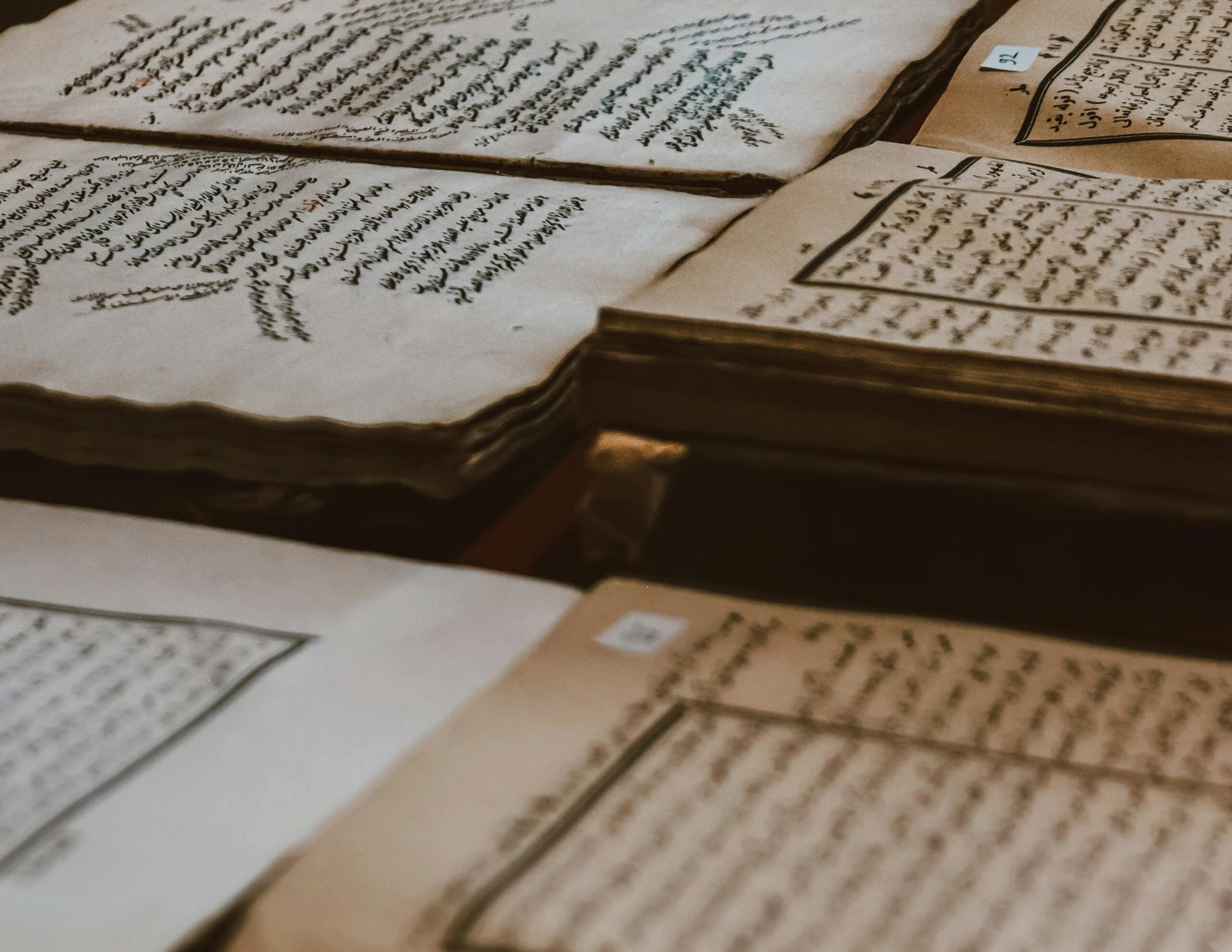
Throughout human history, countless civilizations have risen and fallen, leaving behind written records that hold the keys to understanding our collective past. From cuneiform tablets in Mesopotamia to hieroglyphics in Egypt, from Mayan codices to ancient Sanskrit texts, these documents contain invaluable knowledge about medicine, astronomy, philosophy, and daily life. Yet millions of these texts remain untranslated, locked away in a linguistic time capsule that modern scholars struggle to open.
The challenge is monumental. There are simply not enough expert linguists and paleographers to tackle the overwhelming volume of ancestral documents waiting to be decoded. Some languages have no living speakers, no modern descendants, and only fragmentary dictionaries compiled by early researchers. Others exist in such obscure dialects or damaged conditions that even trained specialists spend years deciphering single pages.
This is where artificial intelligence enters the picture, offering unprecedented possibilities for linguistic archaeology and cultural preservation. Machine learning algorithms can process patterns at speeds and scales impossible for human researchers, potentially unlocking centuries of accumulated wisdom in a fraction of the time traditional methods require.
💡 How AI Deciphers Ancient Scripts
The process of using AI to translate ancestral languages involves several sophisticated technologies working in concert. Neural networks trained on vast datasets can recognize patterns in ancient writing systems, even when those patterns aren’t immediately obvious to human observers. These systems learn to identify recurring symbols, grammatical structures, and contextual relationships that provide clues to meaning.
Computer vision technology plays a crucial role in the initial stages. Many ancient texts exist on deteriorating papyrus, weathered stone, or faded parchment where letters are barely visible to the naked eye. AI-powered image enhancement can bring out details that have faded over millennia, making the text readable for further analysis. This technology can also reconstruct damaged portions of text by analyzing surrounding context and comparing similar documents.
Natural language processing algorithms then take over, comparing unknown languages with known ones to identify linguistic relationships. By analyzing syntax, morphology, and vocabulary patterns, these systems can sometimes determine language families and use related languages as translation bridges. This approach has proven particularly effective with languages that descended from well-documented parent languages.
The Deep Learning Revolution
Deep learning has transformed the translation landscape dramatically. Unlike earlier rule-based systems that required explicit programming of grammatical rules, deep learning models can discover patterns independently through exposure to training data. When applied to ancient languages, these models can learn from parallel texts—documents that exist in both an unknown ancient language and a known modern one—to build translation capabilities.
The Rosetta Stone famously provided this kind of parallel text for ancient Egyptian, containing the same decree in hieroglyphics, Demotic script, and ancient Greek. Modern AI systems can leverage similar multilingual texts, but they can also work with much more limited information, finding creative solutions that human researchers might never consider.
🏛️ Real-World Breakthroughs in Ancient Language Translation
The practical applications of AI in translating ancestral languages are already producing remarkable results across multiple civilizations and time periods. These breakthroughs demonstrate the technology’s potential to reshape our understanding of human history fundamentally.
In 2021, researchers at MIT used neural networks to help decipher Linear B, an ancient Greek script from the Bronze Age. While Linear B had been previously translated through conventional methods, the AI system showed it could arrive at similar conclusions independently and suggested alternative interpretations for contested passages. More impressively, when applied to Linear A—a still-undeciphered Minoan script—the system generated hypotheses about language structure that are now guiding human researchers.
Akkadian cuneiform texts, numbering in the hundreds of thousands, represent another frontier. The Babylonian Engine project uses machine learning to accelerate translation of these ancient Mesopotamian documents. What once took scholars weeks per tablet now happens in minutes, revealing details about ancient economics, legal systems, and scientific knowledge.
Unlocking Indigenous Knowledge Systems
AI translation technology is particularly meaningful for indigenous communities seeking to revive endangered or extinct ancestral languages. Many Native American, Aboriginal Australian, and African tribal languages exist only in fragmentary historical records compiled by colonizers or early anthropologists. These records are often incomplete, biased, or poorly documented.
Machine learning systems trained on these limited materials can help reconstruct vocabulary, grammar, and pronunciation patterns. By comparing related languages within the same family and analyzing the few remaining texts, AI assists communities in rebuilding linguistic bridges to their heritage. This work carries profound implications for cultural identity, traditional knowledge preservation, and healing from historical trauma.
📚 The Technology Behind the Translation
Understanding how AI accomplishes ancestral language translation requires examining the specific technologies and methodologies involved. The process is neither simple nor instantaneous, but represents a sophisticated combination of multiple AI disciplines working together.
Optical Character Recognition for Ancient Scripts
Before any translation can occur, the text must be digitized and made machine-readable. Modern OCR technology has been adapted to recognize ancient writing systems with their unique challenges. Unlike printed modern text with standardized characters, ancient scripts show significant variation based on individual scribes, regional differences, and the materials used for writing.
Advanced OCR systems for ancient languages use convolutional neural networks trained on thousands of examples of each character or glyph. These networks learn to recognize the essential features that define a character despite variations in execution. The systems can even distinguish between similar characters that differ only in subtle ways, preventing translation errors that would compound through the document.
Sequence-to-Sequence Translation Models
Once text is digitized, sequence-to-sequence models handle the actual translation process. These neural networks, particularly transformer architectures, excel at capturing long-range dependencies in language—understanding how words at the beginning of a sentence affect meaning at the end, or how context from previous sentences informs current interpretation.
For ancient languages, these models must work with extreme data scarcity. Modern translation systems for living languages train on millions or billions of sentence pairs. Ancient language systems might have only hundreds or thousands of examples. Researchers address this through transfer learning, where models first trained on abundant modern language data are fine-tuned on the limited ancient materials.
🔍 Challenges and Limitations
Despite impressive advances, AI translation of ancestral languages faces significant obstacles that prevent it from being a complete solution. Understanding these limitations helps set realistic expectations while identifying areas needing further research and development.
The most fundamental challenge is data scarcity. AI systems, particularly deep learning models, typically require vast amounts of training data to achieve good performance. For many ancient languages, only a handful of texts survive. Some languages exist in single documents or inscriptions, making statistical learning approaches nearly impossible. No amount of algorithmic cleverness can fully compensate for insufficient data.
Context and cultural knowledge present another hurdle. Languages don’t exist in isolation—they’re embedded in cultural contexts that provide essential meaning. Idioms, metaphors, cultural references, and contextual assumptions that ancient writers took for granted are often opaque to modern readers, whether human or artificial. An AI might correctly translate individual words while completely missing the intended meaning.
The Problem of Untranslatable Concepts
Every language contains concepts that don’t translate neatly into other languages. Ancient languages, emerging from radically different worldviews and material conditions, contain many such concepts. How do you translate religious or philosophical terms when the underlying belief systems have no modern equivalent? How do you render social hierarchies or familial relationships that don’t exist in contemporary societies?
AI systems can identify these untranslatable elements but struggle to convey their meaning appropriately. Human translators rely on extensive footnotes, explanatory asides, and careful word choices that communicate nuance. AI systems are improving in this regard but still tend toward literal translations that can obscure more than they illuminate.
🌟 Benefits Beyond Academic Research
The value of AI-powered ancestral language translation extends far beyond academic linguistics departments. These technologies offer practical benefits across multiple domains, contributing to fields as diverse as medicine, climate science, and international development.
Ancient texts contain botanical and medical knowledge accumulated over centuries. Traditional healing practices documented in Sanskrit Ayurvedic texts, Chinese medical manuscripts, and indigenous healing traditions often mention plant compounds and treatment approaches that modern pharmacology hasn’t fully investigated. Rapid AI translation makes this knowledge accessible to contemporary researchers seeking new therapeutic compounds or treatment methodologies.
Historical climate data embedded in ancient texts provides valuable information for climate science. Agricultural records, descriptions of weather patterns, accounts of droughts and floods, and observations about plant and animal behavior all contribute to understanding long-term climate trends and variability. AI can quickly extract this information from vast corpuses of documents, accelerating climate reconstruction efforts.
Strengthening Cultural Identity and Heritage
For communities whose ancestral languages have been suppressed or lost, AI translation technology offers a pathway to cultural reconnection. Indigenous peoples worldwide can use these tools to access texts written in their ancestral languages, understanding stories, histories, and knowledge systems that colonization attempted to erase.
This cultural reconnection has psychological and social benefits that extend beyond the merely informational. Language carries worldview, values, and ways of thinking. Recovering ancestral languages through AI assistance helps communities reclaim identities and rebuild connections to land, tradition, and heritage.
🚀 The Future of AI in Linguistic Archaeology
The field of AI-powered ancient language translation is evolving rapidly, with new capabilities and applications emerging regularly. Several promising directions suggest where this technology might lead in coming years.
Multimodal AI systems that integrate text, images, and contextual information represent one frontier. These systems don’t just analyze writing—they consider archaeological context, artifact relationships, artistic depictions, and geographic information. By synthesizing multiple information sources, they develop richer interpretations than text-analysis alone allows.
Collaborative human-AI translation platforms are another development area. Rather than replacing human experts, these systems augment their capabilities, handling routine pattern recognition while humans contribute cultural knowledge, contextual understanding, and interpretive insight. This collaborative approach leverages the strengths of both human and artificial intelligence while compensating for their respective weaknesses.
Democratizing Access to Ancient Wisdom
As AI translation tools become more sophisticated and user-friendly, they may become available to broader audiences beyond specialist researchers. Mobile applications and web platforms could allow anyone interested in ancient texts to explore them with AI assistance, democratizing access to humanity’s written heritage.
This democratization carries both opportunities and risks. Broader access spreads knowledge and sparks interest in ancient cultures, but also raises concerns about misinterpretation, cultural appropriation, and the spread of inaccurate translations. Balancing accessibility with accuracy and cultural sensitivity will be an ongoing challenge.
🤝 Ethical Considerations and Cultural Sensitivity
The application of AI to ancestral language translation raises important ethical questions that the field must address thoughtfully. Technology alone cannot determine how these powerful tools should be used or who should control access to the knowledge they unlock.
Questions of ownership and intellectual property become complex when dealing with indigenous or colonized peoples’ languages. Who has the right to translate these texts? Should indigenous communities have veto power over AI systems trained on their ancestral languages? How should benefits from commercializing ancient knowledge be distributed?
Privacy and sacred knowledge present additional concerns. Many ancient texts contain religious or ceremonial information that communities consider sacred or restricted. Indiscriminate AI translation that makes all texts publicly available could violate cultural protocols about who may access certain knowledge and under what circumstances.
Ensuring Accuracy and Accountability
AI systems can produce confident-sounding translations that are completely wrong. Without proper validation by human experts, these errors can propagate through scholarship and popular understanding, creating persistent misconceptions. Establishing quality control mechanisms and accountability standards is essential as these technologies become more widespread.
Transparency about AI limitations is equally important. Users must understand that AI translations of ancient languages are hypotheses, not definitive interpretations. Clearly communicating uncertainty levels and alternative possible translations helps prevent overconfidence in AI-generated results.
🎯 Building Bridges Across Millennia
The intersection of artificial intelligence and ancestral language translation represents more than technological achievement—it’s a profound expansion of humanity’s conversation with itself across time. These tools allow contemporary people to hear voices silenced by centuries, to learn from accumulated wisdom that seemed permanently lost, and to recognize the continuity of human experience despite radical changes in how we live.
As AI systems become more capable, the volume of translated ancient texts will grow exponentially. This flood of information will require new approaches to organizing, analyzing, and synthesizing knowledge from diverse cultural sources and historical periods. The challenge shifts from “Can we translate this?” to “How do we make sense of everything we’ve translated?”
Interdisciplinary collaboration becomes increasingly important. Linguists, computer scientists, archaeologists, historians, anthropologists, and indigenous knowledge keepers must work together to ensure AI translation serves human understanding rather than replacing it. The goal isn’t to automate away expertise but to amplify it, allowing specialists to work more efficiently while maintaining the interpretive depth that only human understanding provides.
🌈 A Shared Heritage for Tomorrow
Ultimately, AI translation of ancestral languages isn’t just about looking backward—it’s about building a more connected future. By understanding where we’ve come from, we gain perspective on where we might go. Ancient texts offer alternative ways of organizing societies, different relationships with nature, diverse philosophical and ethical frameworks, and examples of how humans have navigated change throughout history.
This historical wisdom becomes particularly relevant as we face contemporary challenges like climate change, social inequality, and rapid technological transformation. Ancient peoples faced their own versions of these challenges, developing responses that may inform our own approaches. AI translation gives us unprecedented access to this accumulated knowledge, creating opportunities for learning from the past in ways previous generations couldn’t imagine.
The technology also reminds us of our shared humanity. Despite obvious differences in how people lived across time and geography, ancient texts reveal universal themes: love and loss, hope and fear, curiosity about the world, concern for children’s futures, and the search for meaning. By making these texts accessible, AI helps us recognize ourselves in ancient writers, building empathy across the most fundamental divide—that of time itself.
As we continue developing and deploying AI for ancestral language translation, we must do so thoughtfully, ethically, and collaboratively. The past belongs to everyone, yet different communities have special relationships with specific ancestral traditions. Honoring these relationships while sharing knowledge broadly represents a balance worth pursuing—one that technology enables but human wisdom must guide.
The languages of our ancestors carry gifts for us: knowledge, perspective, connection, and understanding. Artificial intelligence gives us the tools to unwrap these gifts more fully than ever before. How we use these tools, what we do with the knowledge they reveal, and how we share the benefits they provide will determine whether we truly honor the voices speaking to us across millennia or merely exploit them for contemporary purposes. The choice, as always, remains ours to make.