Virtual heritage exhibitions are transforming how we connect with history, offering immersive digital experiences that bring ancient civilizations and cultural treasures directly to your screen. 🌍

The Digital Revolution in Cultural Preservation
Museums and cultural institutions worldwide are embracing technology to preserve and share humanity’s most precious artifacts. Virtual heritage exhibitions represent a groundbreaking approach to experiencing historical treasures without geographical or physical limitations. These digital platforms combine cutting-edge technology with scholarly expertise to create authentic, engaging encounters with the past.
The global pandemic accelerated this transformation, forcing museums to innovate rapidly. What began as an emergency solution has evolved into a permanent revolution in how we access and appreciate cultural heritage. Today, virtual exhibitions complement physical museums, offering unprecedented accessibility to collections that might otherwise remain out of reach for most people.
Why Virtual Heritage Matters More Than Ever
Traditional museum visits come with inherent limitations: travel costs, time constraints, physical accessibility challenges, and geographic distance. Virtual heritage exhibitions eliminate these barriers, democratizing access to world-class collections. A student in rural India can now explore the British Museum’s Egyptian collection with the same ease as a London resident.
Beyond accessibility, virtual platforms offer preservation benefits that physical displays cannot match. Digital documentation protects cultural heritage against natural disasters, conflict, and deterioration. When the Notre-Dame Cathedral caught fire in 2019, existing 3D scans proved invaluable for reconstruction efforts, demonstrating how virtual heritage serves practical preservation purposes.
Breaking Down Physical and Economic Barriers
The cost of international travel often places world-renowned museums beyond reach for millions of enthusiasts. Virtual exhibitions transform this landscape entirely. With just an internet connection, anyone can access collections from the Louvre, the Smithsonian, or the Hermitage Museum without spending thousands on airfare and accommodation.
Educational institutions particularly benefit from these resources. Teachers can integrate virtual museum tours into curricula, bringing dynamic historical content directly into classrooms. Students engage with primary sources and artifacts in ways that textbooks simply cannot replicate, fostering deeper understanding and genuine curiosity about historical periods.
Technologies Powering Virtual Heritage Experiences
Several technological innovations converge to create compelling virtual heritage exhibitions. Understanding these technologies helps appreciate the sophistication behind these digital experiences.
3D Scanning and Photogrammetry 📸
High-resolution 3D scanning captures artifacts with microscopic precision. Photogrammetry, which creates three-dimensional models from photographs, allows curators to digitize objects too fragile for traditional handling. These techniques produce models detailed enough for academic research, conservation planning, and virtual display.
Museums employ laser scanners and structured light systems to capture objects from every angle. The resulting digital twins preserve not just visual appearance but also precise measurements, surface textures, and material properties. Researchers can study these models indefinitely without risking damage to original artifacts.
Virtual Reality and 360-Degree Experiences
Virtual reality technology transports users directly into reconstructed historical environments. VR headsets provide immersive experiences where visitors can walk through ancient temples, explore archaeological sites, or stand inside Renaissance palaces. The sense of presence these technologies create dramatically enhances engagement and retention.
For those without VR equipment, 360-degree web experiences offer similar benefits through standard web browsers. Users navigate through spaces using mouse or touch controls, examining rooms and artifacts from any angle. These platforms maintain much of VR’s immersive quality while requiring no specialized hardware.
Augmented Reality Integration
Augmented reality overlays digital information onto the physical world through smartphone screens or specialized glasses. Some museums now offer AR applications that enhance physical visits by displaying reconstructions of damaged artifacts, showing how ancient objects appeared when new, or providing contextual information triggered by viewing specific exhibits.
This technology particularly excels at bringing ruins to life. Pointing a device at archaeological remains can reveal full reconstructions of buildings as they appeared centuries ago, helping visitors visualize historical contexts that crumbled stones alone cannot convey.
Leading Virtual Heritage Platforms You Can Explore Today
Numerous platforms offer exceptional virtual heritage experiences right now. These resources provide hours of educational entertainment and cultural enrichment.
Google Arts & Culture
Google Arts & Culture stands as perhaps the most comprehensive virtual heritage platform available. Partnering with over 2,000 museums and cultural institutions across 80 countries, it offers street-view-style tours through galleries, ultra-high-resolution artifact images, and curated exhibitions on specific themes.
The platform’s Art Camera technology captures artworks at gigapixel resolution, revealing brushstroke details invisible to the naked eye during physical visits. Users can zoom into paintings with unprecedented clarity, examining techniques and details that deepen appreciation for artistic mastery.
Smithsonian Open Access
The Smithsonian Institution has released millions of high-resolution images into the public domain through its Open Access initiative. This treasure trove includes 3D models, digitized archives, and virtual tours spanning natural history, art, culture, and science.
The 3D digitization program particularly impresses, offering rotatable models of everything from Abraham Lincoln’s life mask to ancient Buddhist sculptures. Educational materials accompany many items, providing context and encouraging deeper exploration.
The British Museum’s Virtual Tours
The British Museum offers virtual tours through its iconic galleries, allowing exploration of collections spanning human history from prehistoric times to the present. Their online collection database contains over 4.5 million objects, many with detailed photographs and scholarly descriptions.
Thematic virtual exhibitions curated by museum experts provide guided experiences through specific topics, from ancient Egypt to contemporary Africa, offering structured learning paths through this vast collection.
Experiencing Ancient Civilizations Through Virtual Reconstruction
Some of the most compelling virtual heritage projects recreate entire ancient sites using archaeological evidence and historical research. These reconstructions offer experiences impossible through conventional means.
Walking Through Ancient Rome 🏛️
Several projects have reconstructed ancient Rome at various historical periods. These virtual environments let users walk through the Forum as it appeared during the Empire’s height, enter buildings long destroyed, and witness daily life in the eternal city.
The attention to architectural detail, informed by decades of archaeological research, creates educational experiences that surpass even the most thorough textbook descriptions. Understanding spatial relationships between buildings and experiencing the scale of ancient structures provides insights impossible through photographs or floor plans alone.
Exploring Egyptian Tombs and Temples
Egypt’s Ministry of Tourism and Antiquities has developed virtual tours of famous sites including the tomb of Tutankhamun and the temples of Abu Simbel. These experiences preserve sites threatened by tourist traffic while allowing worldwide audiences to explore chambers decorated with millennia-old art.
Many Egyptian tombs are closed to the public for conservation reasons, making virtual access the only way most people will ever see their interiors. These virtual tours thus provide genuinely unique opportunities rather than merely convenient alternatives to physical visits.
Educational Benefits That Transform Learning
Virtual heritage exhibitions offer educational advantages extending beyond simple convenience. These platforms fundamentally change how students and lifelong learners engage with historical content.
Self-Paced Exploration and Repeated Visits
Physical museum visits operate under time constraints. Closing hours, tired feet, and competing exhibitions limit how thoroughly visitors can engage with collections. Virtual platforms eliminate these pressures entirely. Users can spend unlimited time examining artifacts, return repeatedly to specific items, and explore at whatever pace suits their learning style.
This flexibility particularly benefits students researching specific topics. Rather than taking hurried notes during a single museum visit, they can repeatedly reference virtual exhibitions while writing papers or preparing presentations, ensuring accuracy and deepening understanding.
Contextual Information and Multimedia Learning
Virtual exhibitions can embed rich contextual information directly alongside artifacts. Videos, audio commentary, related images, and scholarly articles connect through hyperlinks, creating multidimensional learning experiences. Users follow their curiosity through interconnected content, discovering relationships and contexts that physical labels cannot adequately convey.
Many platforms offer content at multiple levels, from brief introductions for casual browsers to detailed academic information for serious researchers. This scalability makes virtual heritage accessible to diverse audiences with varying backgrounds and interests.
Challenges and Limitations of Virtual Heritage
Despite remarkable advantages, virtual heritage exhibitions face genuine limitations that deserve honest acknowledgment.
The Irreplaceable Physical Experience
No digital representation fully captures the experience of standing before an actual artifact. The scale, presence, and subtle details of three-dimensional objects in physical space create impacts that screens cannot entirely replicate. Many museum professionals emphasize that virtual exhibitions should complement rather than replace physical visits.
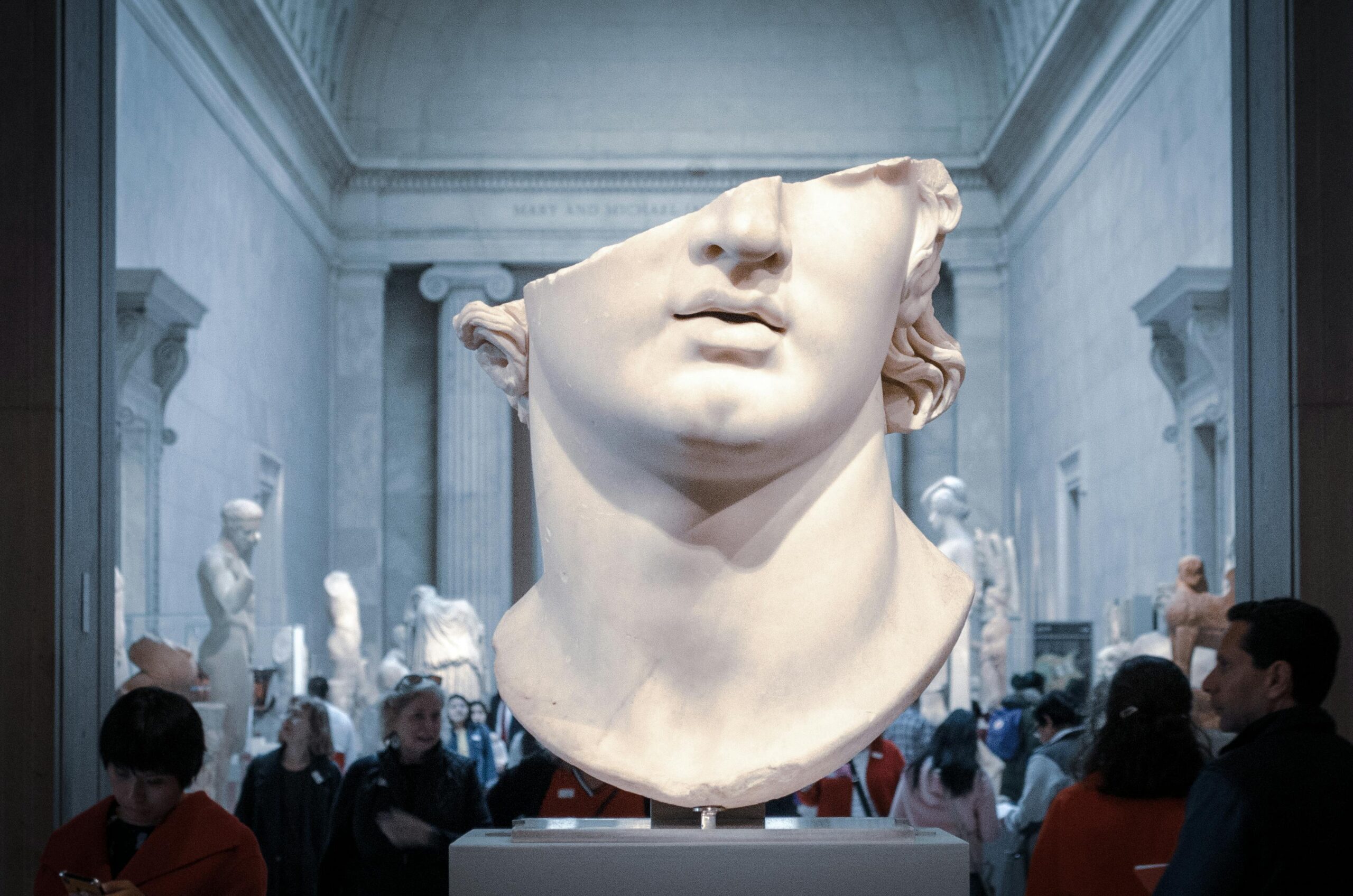
Certain aspects of artistic works—the texture of brushstrokes, the shimmer of gilding, the translucency of marble—resist digital capture. While technology continually improves, a gap remains between virtual representations and direct sensory experiences.
Digital Access Inequality
Virtual exhibitions require reliable internet connections and compatible devices. This prerequisite paradoxically creates new barriers even while removing others. Communities lacking digital infrastructure cannot access these resources, potentially widening rather than narrowing cultural access gaps.
Addressing this challenge requires conscious effort from institutions, including offline downloadable content, partnerships with community centers and libraries, and mobile-optimized platforms that function on basic smartphones with limited data plans.
The Future of Virtual Heritage Experiences 🚀
Emerging technologies promise even more impressive virtual heritage experiences in coming years.
Artificial Intelligence and Personalization
AI algorithms can create personalized exhibition experiences based on user interests, previous interactions, and learning objectives. Imagine virtual museum guides that adapt their commentary to your knowledge level, suggest related artifacts based on what captures your attention, and answer questions in natural language.
Machine learning also assists conservation and research. AI can identify patterns across artifact collections, suggest dating for unprovenanced objects, and even predict deterioration risks, supporting preservation efforts.
Haptic Feedback and Multisensory Integration
Haptic technology provides touch feedback through controllers or gloves, allowing users to “feel” virtual objects. While still developing, this technology could eventually convey texture, weight, and temperature, adding sensory dimensions currently missing from virtual experiences.
Researchers are exploring multisensory virtual heritage that incorporates sound, smell, and even taste where historically appropriate. Imagine experiencing a medieval marketplace with period-accurate sounds, smells, and visual reconstruction working together to create unprecedented immersion.
How to Start Your Virtual Heritage Journey Today
Beginning your exploration of virtual heritage requires no specialized equipment or technical expertise. Here’s how to get started:
- Start with major platforms: Google Arts & Culture offers the broadest initial entry point, with collections from worldwide institutions in one searchable interface.
- Follow your interests: Search for specific historical periods, cultures, or artifact types that already interest you. Passion drives deeper exploration.
- Explore museum websites directly: Most major museums offer virtual tours and online collections through their official websites.
- Join virtual events: Many institutions host online lectures, curator talks, and guided virtual tours, adding human expertise to digital resources.
- Use educational resources: Platforms like the Smithsonian Learning Lab offer structured educational materials built around virtual collections.
- Experiment with VR if available: If you have access to VR equipment, seek out heritage experiences designed for these platforms for maximum immersion.
Making Virtual Heritage Part of Your Cultural Life
Virtual heritage exhibitions need not be occasional novelties. They can become regular parts of cultural engagement and lifelong learning.
Consider scheduling regular virtual museum visits just as you might plan physical cultural outings. Dedicate an evening each month to exploring a new virtual exhibition or diving deeper into a topic that fascinates you. Share discoveries with friends and family, creating social experiences around virtual exploration.
Integrate virtual heritage into hobbies and interests. Genealogy researchers can explore museums in their ancestors’ homelands. History enthusiasts can deepen understanding of periods they’re reading about. Artists can study techniques by examining masterworks in extraordinary detail.
Preserving the Past for Future Generations 🌟
Virtual heritage exhibitions represent more than convenient access to cultural treasures. They constitute critical preservation infrastructure protecting humanity’s shared heritage against time, conflict, natural disasters, and deterioration.
When conflict destroys heritage sites, as tragically occurred in Palmyra and countless other locations, digital documentation may be all that survives. These virtual records enable eventual reconstruction and ensure that knowledge of lost treasures endures even when physical artifacts cannot.
By engaging with virtual heritage, you participate in this preservation mission. Popular platforms receive funding and support to continue digitization efforts. Your participation helps justify the significant resources required for comprehensive cultural preservation.
The democratization of cultural access through virtual exhibitions fulfills ideals that museums have pursued since their inception: making human achievement and knowledge available to all. Technology finally enables this goal at unprecedented scale. Whether you explore ancient civilizations, marvel at artistic masterpieces, or investigate cultural traditions from across the globe, virtual heritage exhibitions offer portals to infinite discovery.
Step into the past today through these remarkable platforms. Experience history not as distant abstraction but as vivid, tangible reality. The treasures of human civilization await your exploration, requiring only curiosity and an internet connection to begin an endless journey through time and culture.